Welcome Aboard

Our friends at the newly opened 10-speed roastery/Dirty Fingers can make a delicious cup of coffee, fix your bike and get you back on the road quickly. What’s more is that they are the newest addition to the curbside composting program. Welcome aboard and be sure to support these inspirational local, growing businesses!

Posted in Uncategorized | Leave a comment

Compost Use

When growing things be it fruit trees, veggies or lawns there are so many variables and so many factors that there is no one right way to go about it.  Some people swear by tilling compost into the soil others are hardcore no-tillers or lasagna gardeners. By no means are we experts on soil, gardening, landscaping or agriculture – but below are compost use tips we’ve aggregated from research, customers, and lessons learned. Take them with a grain of salt and always use your own best judgement.

Orchard + Vineyard

Omeg Orchards row spreading with Whatcom spreader

Establishment (bare root): Excavate a planting hole slightly shallower and 2 to 3 times the width of the root structure. Uniformly blend compost with the excavated soil at one (1) part by volume compost to 2-3 parts by volume soil. Ensure roots are pointing down and not curling back towards the surface. Backfill and firm the soil blend around the root system within the planting hole. Always water thoroughly after planting.

Carter Orchards top dress with straw

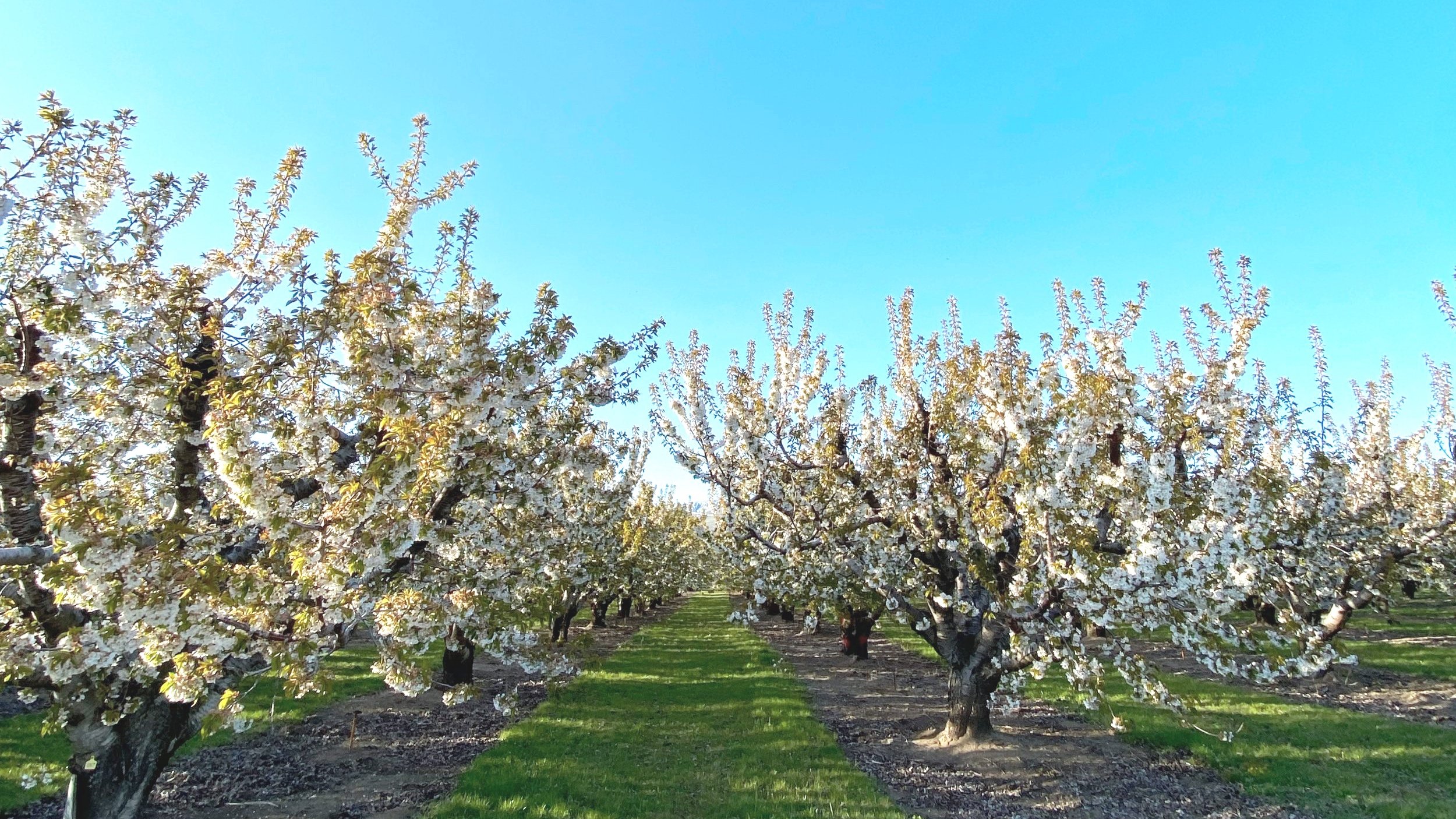
                                                                   Annual or distressed block treatment: In The Gorge we have seen fruit trees applied at 2-5 tons per acre of trees. Directional spreading in the planting rows has been accomplished with spreaders or trailers and shovels. Some orchardist like to then cover compost with straw for additional moisture retention and wind protection.  Application is most preferable in the fall or secondarily the spring.

Note: The nutrients contained in compost should be considered when applying fertilization. They will typically offset plant nutrient requirements, thereby potentially reducing fertilizer application rates. Ask us for recent lab data.

Compost Benefits in orchard and vineyard production:

  • Adds Organic Matter! (typically 40-50% by volume in DH compost)
  • Water retention & lateralization (reduced irrigation needs)
  • Soil structure, porosity, and density
  • Microbiology (bacterial + fungal)
  • Buffers soil pH
  • Improves Cation Exchange Capacity (CEC)

Veggie + Flower Garden

top dressing an existing bed (my house)

Establishment: Compost should be uniformly applied over the entire area at an average depth of 1-2 inches and then incorporated to a depth of 6-8 inches. Higher application rates of compost may be used if the compost is incorporated to a greater depthRake the soil surface smooth prior to seeding or planting. The soil surface should be free of large clods, roots, stones, and other material that will interfere with planting. The amended area should be watered thoroughly after planting.

Mosier Valley Organics compost backfill on asparagus

Lower compost application rates may be necessary for salt sensitive crops (e.g., strawberries),  while higher application rates may be used for plants that require greater amounts of fertility (e.g., tomatoes).

Maintenance: Top dress existing planting beds with 1-2″ of compost ideally in the fall or secondarily the spring prior to planting. Applying in the fall allows nutrients to leach into the soil over the winter months. Click here for a compost use calculator.

Compost Benefits in gardens:

  • Adds Organic Matter! (typically 40-50% by volume in DH compost)
  • Water retention & lateralization (reduced irrigation needs)
  • Soil structure, porosity, and density
  • Microbiology (bacterial + fungal)
  • Adds fertility and nutrients

Starts and Seeds

Mosier Valley Organics basil starts (this greenhouse is really cool and made from the old automatic doors of a hospital)

This is where people can get the wildest variations. While you can plant directly into our compost (see below) we recommend variation in a seed or potting mix. Peat moss, coconut husks, and bark chips are all great components in a compost seed mix (we hope to have our own next spring). A fluffy and diverse mix will give your seeds a strong start.

A note on thermal compost: We typically perform a sensitive plant bioassay (fancy term for planting from seed) on our compost prior to selling it. We use red clover and cucumber because they are particularly sensitive to “hot compost” and persistent herbicides. So far this season we have not had a failing bioassay on our compost – meaning you are safe to plant need seeds and starts directly into our compost.

Lawns

Establishment: Compost should be uniformly applied over the entire area at an average depth of 1-2 inches and then incorporated to a depth of 6-8 inches using a rotary tiller or other similar equipment. Rake the soil surface smooth prior to seeding, planting or sodding. Plant seed and re-rake to ensure good seed to soil contact. Always seed, plant or sod during the recommended period of time in your region. Water the heck out of new grass seed and keep the water going to ensure good root establishment.

Maintenance: Annual topdressing with a finer grade compost (1/4” – 3/8” screened) is a good maintenance practice on both cool and warm season lawns. This can be done before or after core aeration to reduce compaction and improve moisture holding capacity. Drag or rake compost into the aeration holes. Cool season lawns can be compost topdressed in the early spring or fall. It’s best to apply compost to warm season lawns in the spring just prior to the active growing season. The area should be watered thoroughly after any seeding. Deep and infrequent watering will keep a lawn healthly.

Trees & Shrubs

Establishment: Excavate a planting hole slightly shallower and 2 to 3
times the width of the root ball or container. Set the root ball on firm soil
so that the top of the root ball sits slightly higher than the final grade.
Uniformly blend compost with the excavated soil at one (1) part by volume compost to 2-3 parts by volume soil. Compost with higher amounts of salts and nutrients should be used at lower rates (e.g. 1:3 or 1:4 parts compost to soil). Backfill and firm the soil blend around the root ball within the planting hole. Always water thoroughly after planting. It should be noted that whenever possible, trees and shrubs should be planted in a mass planting bed, where multiple plants are established in a larger amended bed. This technique allows for greater planting success.

Note: plants like azaleas and rhododendrons prefer acidic soils and typically are not happy in a yard debris based compost like ours. 

Maintenance: Apply a coarser compost mulch (1” – 2” screened) over the garden bed to conserve moisture, for weed suppression and/or for aesthetic purposes.  Note: The nutrients contained in compost should be considered when applying fertilization. They will typically offset plant nutrient requirements, thereby potentially reducing fertilizer application rates.

Posted in Gardening/Farming | Leave a comment

Failure Part IX: Growing Pains

We always try to be transparent about what’s going on out here, if it’s good or bad. Lately, we’ve experienced some growing pains and unfortunately it has impacted our community. Our composting aromas have been stronger lately, and we apologize for the disturbance it may have caused. Odor is our number one concern at Dirt Hugger and we are constantly thinking about it.  We are taking action now to correct the issue and have now learned that even minor tweaks in the compost recipe are unacceptable. We want everyone to enjoy clean air outside their window and enjoyable walks on the river path -we enjoy using it as well.

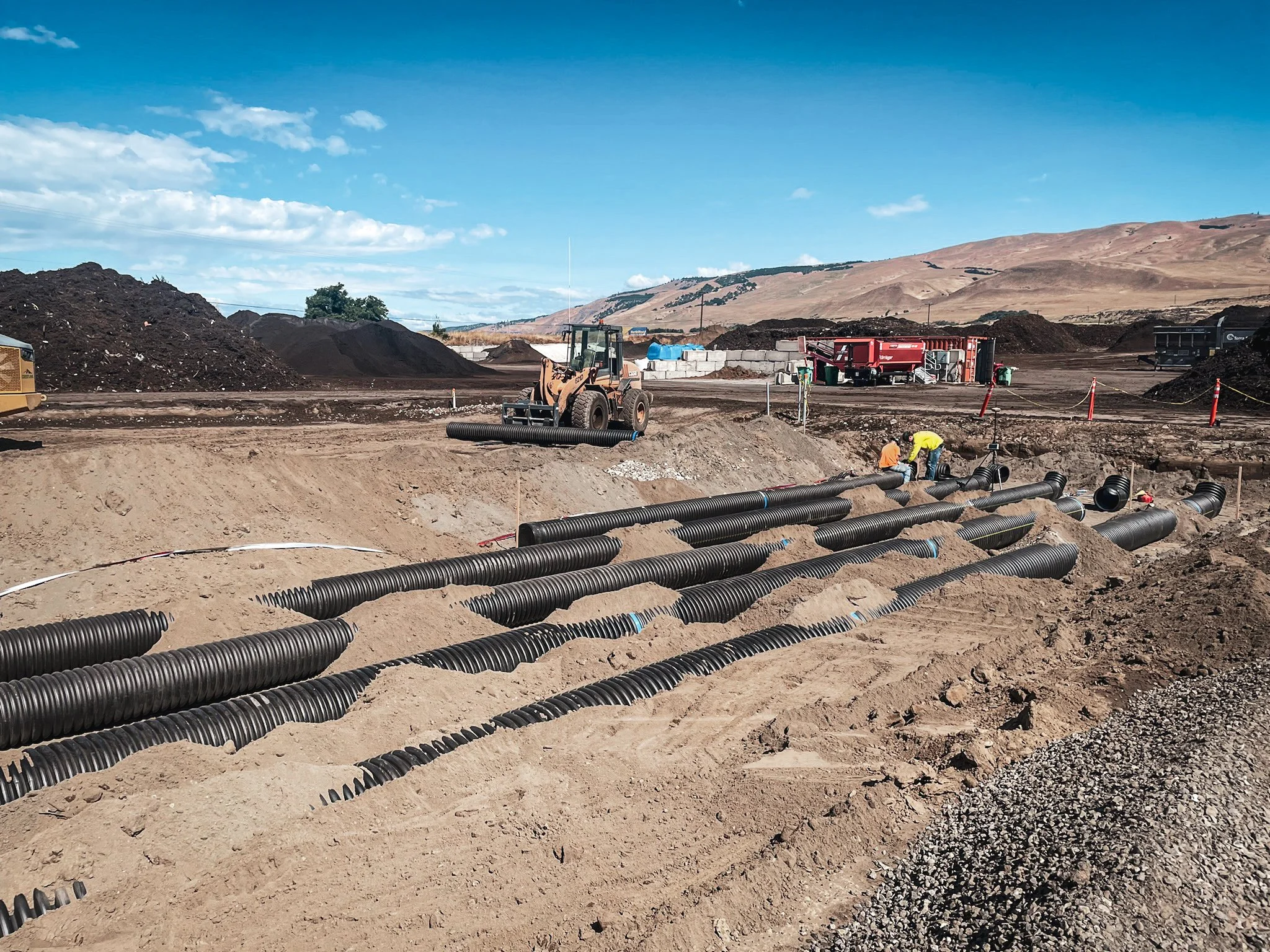
There have been two main reason for increased aroma at our site: the pond, and our compost recipe. The pond builds up organic matter in the bottom, which creates odor as the weather gets warmer. This year, in addition to getting in the bottom ourselves, we hired a water consultant to help drain and deal with the pond odor. We drained the pond on April 30th which we feel did a lot to mitigate its odors. The issue has been that we originally designed the pond as a storm water catchment pond, which we thought it was. We now realize the pond needs to be more of an active water treatment pond. When the weather dries out this summer we will redesign and reconfigure the pond to create a more long-term solution in order to avoid odors, especially in the spring.

The second main odor generator, and what we think is generating aroma, comes from our compost recipe. Since opening about a year and a half ago we have been blending lots of ground yard debris in with the other high nitrogen feedstocks (i.e. fruit, food, and cherry sludge). This creates a good compost recipe and reduces odors from composting food scraps. About 3-4 weeks ago we lost a main source of woody material, which has made our recipe out of the normal balance. The main result is higher odor. We ground up woody yard debris on Monday and have begun blending it back into the recipe, which should make a marked difference. It will take us about two more weeks to blend the woody material back into the remaining compost, which should help mitigate overall odors. If this is not the case, please let us know.

We are thankful to the Port of The Dalles and the entire The Dalles community for supporting our business. Our desire is the be the best neighbors possible and respect others who enjoy this beautiful area. Thank you to everyone who has provided feedback – we appreciate it.

Posted in Uncategorized | Leave a comment

Hiring (again again) “Odd Job” / Trash Warrior

Odd Job was the right hand person to Goldfinger, often doing the tough jobs, that ultimately made them successful (in the villian-sort-of-way). We are on the hunt for Dirt Hugger’s very own, “Odd Job”/ Trash Warrior.  The role of “Odd Job” will be just that- painting huts, fixing tarps, and mostly picking trash out of incoming feedstock. Someone who is energetic, passionate about compost, loves working outside, and doesn’t mind getting dirty will be a good fit. This physically active job, is crucial for the quality of Dirt Hugger compost and cleanliness of our facility.

This is an entry-level job with flexible hours. Interested parties should email a letter of interest and one page resume to tyler@dirthugger.com. No phone calls please. 

Posted in Business | Tagged , , , | 2 Comments

Spring Update

So….we’ve been pretty bad about posting updates lately (i.e. the past four months). But, my friend Joe told me this weekend that if you’re blogging, you’re not actually doing anything, but just talking about doing things. I’ll take that comment not as an insult, but that we’ve just been flat out too busy to blog recently. So, in a lame attempt to get everyone caught up on the latest and greatest at DH, below is a photo essay of the spring so far. Enjoy!

two new acres of composting area!

65 new trees planted (thanks Wasco Co SWCD!)

new storage bays with more products!

a semi load of compost to a local farm

compost + cherry orchard = happy trees

landscape project with FLI Landscaping

sunrise

Fool me Twice (cleaning the pond for the second year)

Garden delivery

Ghostbuster trash pak (a modified leaf blower/shop vac)

Grinding in the rain (not super fun)

A sea of compost

pond empty- huge thanks Dan Gleasman

jim building new hut

inside the new sales shack

Load er’ up

the new sales hut- made from recycled materials

May St School waste audit.

moving compost to the new curing pad

The Dalles Wahtonka High School garden project

The Dalles High School garden project (cont.)

new stencil

Ye Old Site

the split truck divider works! (only two products, not three as pictured)

black gold at the end of the rainbow

Posted in Business, Composting, Events, Gardening/Farming | Tagged , , , , , , , , , , , , , , , , , , , | 1 Comment

Now Hiring (Again!)

In the beginning (see photo) we thought we could make compost with pitch forks, shovels and garden hoses in Tyler’s back yard.  We’ve grown beyond that point and now need heavy machinery to create, turn, and blend the piles of compost (same process, just a bigger scale). Which, leads us to the newest position at DH – “The Big Kid in a Sandbox”. If you or anyone you know fits the position, please let us know.

Skid steers, loaders, excavators, dump trucks – have you operated each of these? If so, we’d like to talk.  We are seeking someone who can streamline material processing, create solutions to heavy construction challenges, and that doesn’t mind coming home covered in dirt. Main tasks will include operating a front-end loader to build compost windrows, move material, and screen finished product. This outdoor position will be active in creating high-end compost, delivering to customers, and any of the million other things that pop up in a given day. Experience with heavy machinery is a must, being mechanically inclined, and interest in working in composting is preferred. Please send letter of interest/resume to pierce@dirthugger.com if interested.

(No phone calls please).


Posted in Uncategorized | Leave a comment

Now Screening Daily

The sun has been shining in The Dalles and locals are starting to think about their gardens and farms. Many of you have called to ask if we have compost available – we are happy to say, we do. We have been working away all winter to hopefully have lots of compost this year (we ran out during the spring last year) and are now screening compost. (Screening is the last step in our process before making compost ready-to-use).  Our best advice to ensure availability is to order early. We are open for pickup Mon -Fri 9-4pm and now Sat 9-12. We are also able to deliver, usually within a couple of days of notice.

Posted in Composting, Gardening/Farming | Tagged , , , , | Leave a comment